
Upson County Arrest Records and Court Charges
Upson County arrest records are created on the law-enforcement side of a case. The public jail roster can show a person's name, custody status, sex, height, weight, address, arrest date, arresting agency, days in jail, total bond, and charge rows. Those charge rows can include a warrant number, count, Georgia statute, description, misdemeanor or felony marker, and court. The roster is useful for current custody and recent arrest context, but it should not be read as proof that a person was convicted.
Court charges after arrest are different. A charge becomes part of the court path when the filing is sent to the court that can act on it. In Upson County, Magistrate Court approves most criminal warrants and handles first appearances and bond after arrest. Felony prosecution moves through the Griffin Judicial Circuit District Attorney's Office and Superior Court. The full case file, plea, sentence, and final judgment belong with Upson County criminal court records; booking detail and current custody belong with Upson County inmate records.
The Upson County Sheriff's Office page is the official county starting point for sheriff links and public safety records.

The sheriff source helps separate custody facts from court filings, which is the main distinction behind Upson County arrest records and court charges.
Find Upson County Arrest Records
Start with the record creator. For booking and custody, use the Upson jail population site linked by the sheriff. For issued arrest warrants and some magistrate matters, use Georgia Magistrate Public Records. For felony case charges and later court action, use the Upson Clerk civil and criminal portal or contact the Clerk of Superior Court. If an online result is unclear, use the court named in the charge row rather than guessing from the arresting agency alone.
- Check the Upson jail roster for current custody, arrest date, arresting agency, bond, warrant number, and charge rows.
- Search Georgia Magistrate Public Records when the issue may involve an issued arrest warrant, bad-check matter, ordinance case, or magistrate calendar.
- Use the Clerk of Superior Court civil and criminal search for a court case once charges have moved into Superior Court.
- Call the relevant office when a recent arrest, sealed case, transfer, or name mismatch keeps a record from appearing online.
The Upson County Judicial Circuit staff directory identifies Griffin Judicial Circuit court contacts and helps confirm which court office is tied to a charge record.
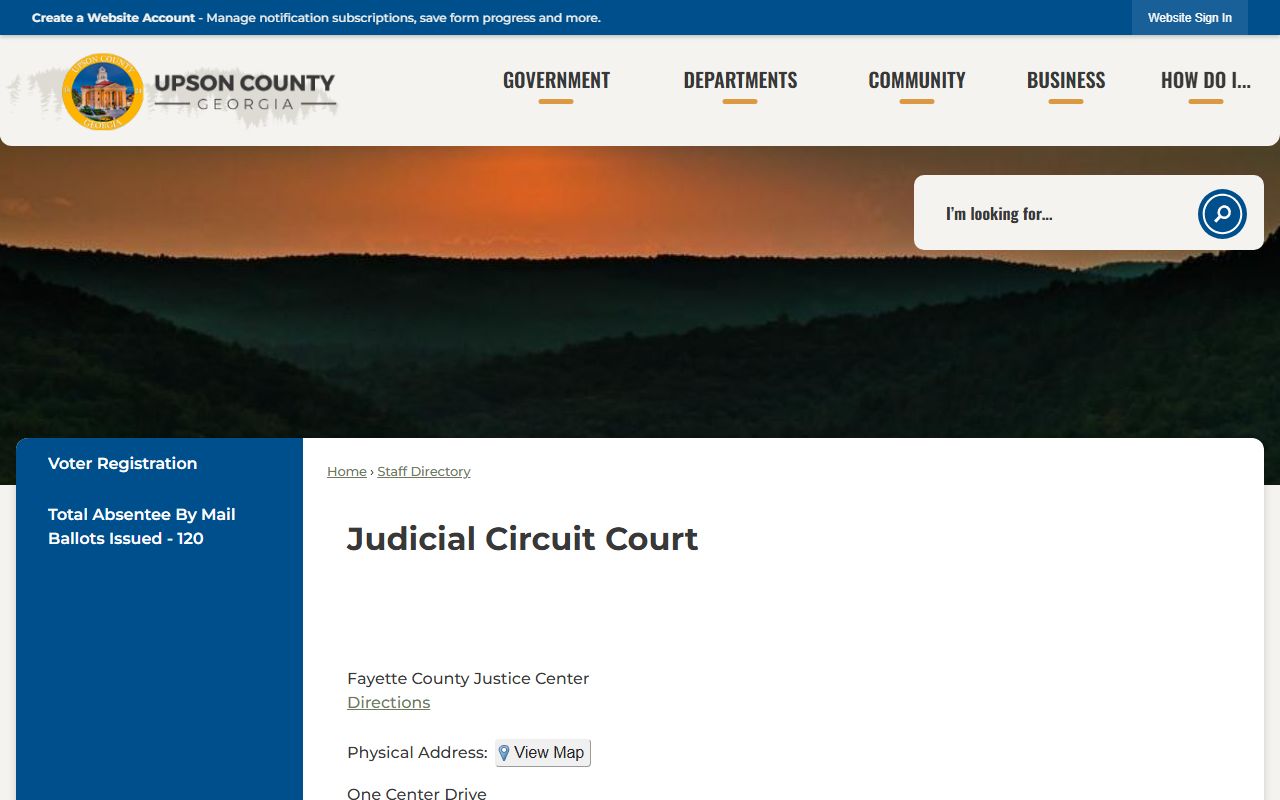
Directory details matter because an arresting agency, a warrant court, and the final trial court may not be the same office.
Upson County Charges After Arrest
A charge record is the accusation that moves toward court review. The research file names indictments, accusations, warrants, bond applications, pleadings, motions, sentences, correspondence, and related papers as part of Superior Court felony case files. In Upson County, the District Attorney's Office prosecutes serious felonies in Superior Court for the Griffin Judicial Circuit. Magistrate Court still matters early, since it approves most criminal warrants and conducts first appearance and bond proceedings after arrest.
| Document | Who Uses It | What It Does | Upson County Context |
|---|---|---|---|
| Complaint or warrant affidavit | Law enforcement and Magistrate Court | States probable cause for arrest or a criminal accusation | Magistrate judges approve most criminal warrants issued in Upson County. |
| Accusation | Prosecutor | Files a formal charge without a grand-jury indictment where allowed | May appear in court records with charge, count, plea, and disposition fields. |
| Indictment | Grand jury and prosecutor | Brings felony charges into Superior Court | Felony case files can retain indictments and related papers permanently. |
The Georgia Department of Corrections Upson County Jail listing is a state directory reference for the local jail facility.
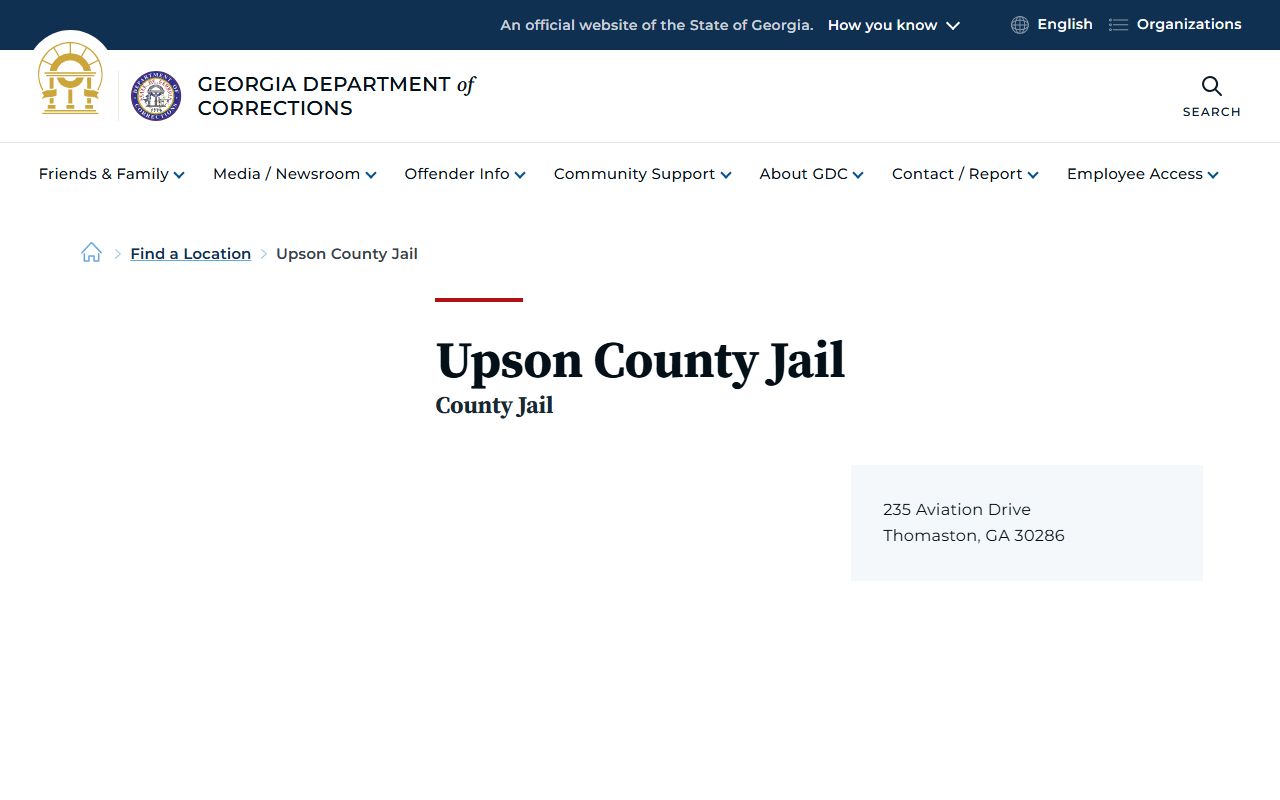
The state listing is not the jail roster itself, but it confirms the local facility that appears in arrest and custody workflows.
Upson County Charge Status Table
Charge status can change after a Upson County arrest. A jail row may show the charge that supported booking, while the court file may later show an amended count, reduced charge, dismissal, nolle prosequi entry, plea, verdict, or sentence. The status should be read with the case date and court. A single arrest can also produce more than one count, so each charge row needs its own review.
| Status | Meaning | Record Caution |
|---|---|---|
| Pending | The charge has not reached final disposition. | Do not treat a pending charge as a conviction. |
| Amended or reduced | The prosecutor or court changed the charge from the first filing. | Compare the original count with the current court entry. |
| Dismissed | The court ended that charge without a conviction on that count. | Other counts from the same arrest may still remain. |
| Nolle prosequi | The prosecutor chose not to continue that charge. | Check whether the entry applies to all counts or only one count. |
| Plea or verdict | The charge reached an adjudicated outcome. | The sentence and probation terms are part of the court case file. |
Note: A total bond value on the jail roster explains release status, not guilt or final sentence.
Upson County Charges vs Convictions
Upson County arrest records may display charges before the court has made any final decision. A conviction is different. It follows a guilty plea, nolo contendere plea where treated as a conviction, jury verdict, or judge finding. Georgia records can also contain dismissed charges, reduced counts, probation violations, failure-to-appear entries, and bond information. That mix is why a charge table should be read as a case status snapshot, not as a finished criminal-history summary.
| Point Compared | Charge | Conviction |
|---|---|---|
| What it is | An accusation filed after arrest or through court process | A final finding or plea of guilt |
| Where it appears | Jail roster, warrant row, magistrate record, or court case | Court disposition and state criminal-history channels |
| What can change | Counts can be added, amended, reduced, or dismissed | Sentence, probation, appeal, or restriction status may later change access |
| How to verify | Check the court named in the charge row | Request the final disposition from the court clerk |
The Georgia offender lookup guide explains the state path for sentenced adult offenders, which is separate from county jail custody.
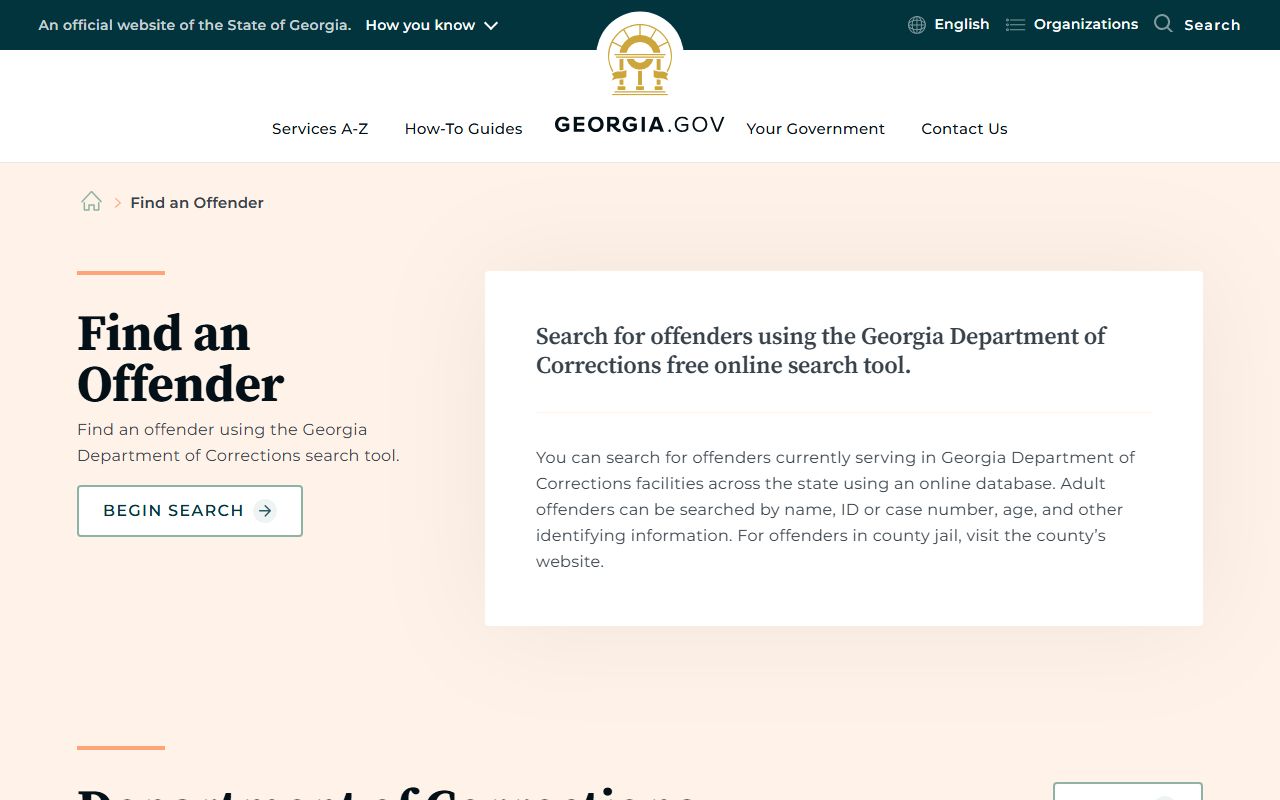
That statewide offender source is useful only after custody has moved into the state correctional system.
Public Access for Upson County Charges
Georgia public access depends on the record type. Agency records can be requested under the Georgia Open Records Act, including the timing and fee rules summarized by the Governor's open-records page. Court files also follow court rules and sealing orders. Uniform Superior Court Rule 21 supports public court access unless a law or order restricts it. For certified copies, the office that owns the court file remains the right source.
- O.C.G.A. 50-18-70
- Georgia agency records are generally requestable unless a law makes the record exempt or confidential.
- O.C.G.A. 50-18-71
- Agencies respond within three business days and may charge for search, redaction, production, and copies.
- O.C.G.A. 35-3-37
- Georgia calls many criminal-history limits "record restriction," and some requests route through the prosecutor.
The GBI news item mentioning the Upson County Narcotics Task Force shows how multi-agency law enforcement activity can create records outside one local court office.
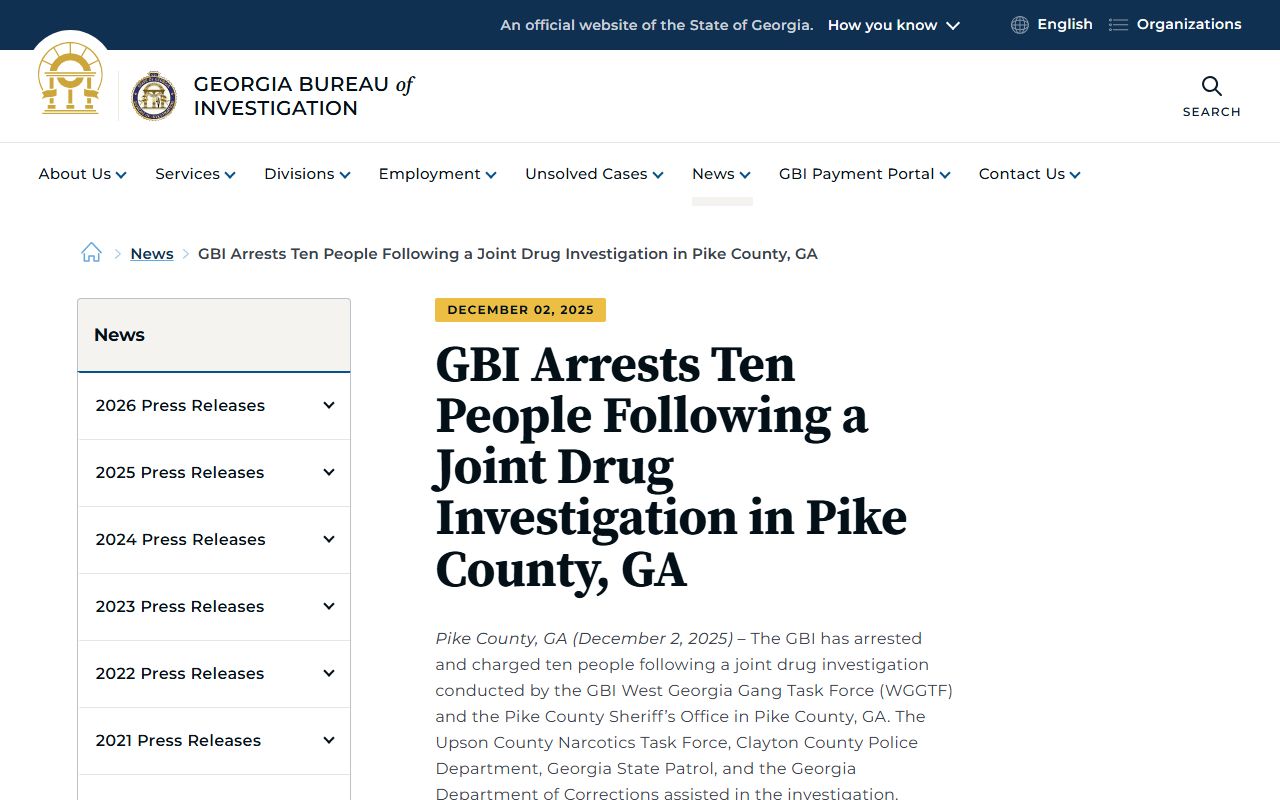
News releases are not court records, but they can help identify which agency may hold a related arrest or investigative record.
Restricted Upson County Charge Records
Not every charge record is public in the same way. Juvenile records are separate and often closed. Sealed court records may be hidden from public portals. Personal identifiers, protected domestic filings, medical details, and minor information can be redacted. Search warrants and investigative files may be withheld while active. A public-facing database may also omit older records, newly filed entries, and records that require clerk review.
For a sealed charge file, check with the Clerk of Superior Court or the issuing court. For a Georgia record-restriction issue, the GBI process and the prosecuting attorney are the key sources. For juvenile matters, access is limited to authorized parties and court-approved uses.